
Let’s be real—running from your fears only keeps you stuck. Facing your fears isn’t about pretending you’re fearless; it’s about learning how to be brave even when life feels uncomfortable. Therapy that helps you confront fear creates space for the parts of you that feel overwhelmed, guiding them toward healing and growth.
This journey can break old patterns, build resilience, and reconnect you with your true self. We’ll explore ten powerful therapeutic approaches, backed by expert insights and evidence-based practices, to help you overcome and face your fears and step into a more confident and empowered life.
1. Exposure Therapy
Think of exposure therapy as a workout for your bravery. Instead of dodging what makes you anxious, you face it head-on, over and over, until your brain realizes it’s not so scary after all. Bit by bit, you’re teaching your mind that those fears don’t control you.
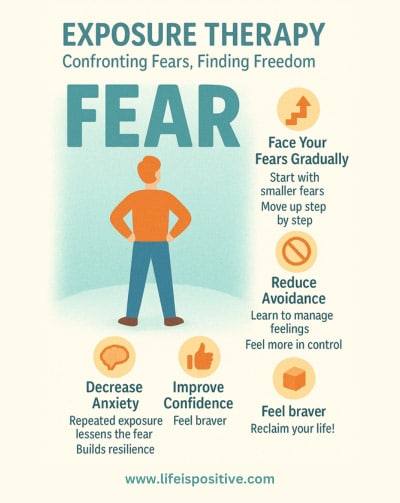
The result? Your worries shrink, your confidence grows, and you start feeling stronger in situations that once felt overwhelming. It’s courage training that truly pays off.
Whether you’re tackling phobias, social anxiety, or even PTSD, this method can be a game-changer in shrinking your fears and boosting your confidence.
2. In Vivo Exposure: Facing Fears in Real Life
Think of in vivo exposure as the real-world version of exposure therapy. Instead of just picturing your fears, you actually step into those situations—but in a safe, supported way. For example, if heights make you nervous, you might start small by standing on a balcony, then gradually work your way higher. Each step teaches your mind and body that you’re stronger than your fears. And the best part? Every time you face it, the fear gets a little easier to handle.
Read: Therapy For Anger Management
3. Imaginal Exposure
Think of imaginal exposure as running a mental movie of your fears. Instead of diving straight into real-life situations, you use your imagination to safely explore those stressful scenarios. This approach is especially powerful for challenges like PTSD, where revisiting the actual scene isn’t possible—or safe.
By working through memories and emotions in a supportive space, you gradually lower the intensity of the anxiety tied to them. Over time, your mind learns that those fears don’t have to control you.
4. Virtual Reality Exposure Therapy (VRET)
Virtual Reality Exposure Therapy (VRET) is like a high-tech playground for facing your fears. Instead of jumping straight into real-world situations, you step into a safe, controlled VR environment designed to help you practice courage.
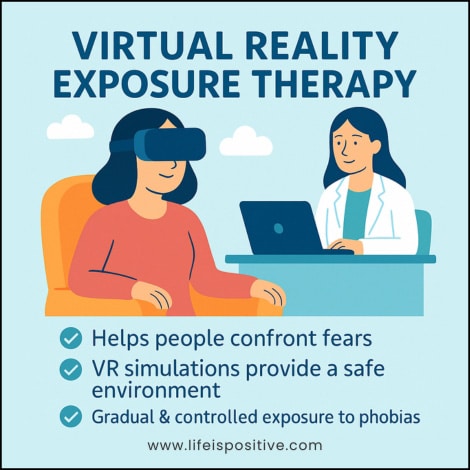
Think of it as training for the big game—without ever leaving your couch. It’s especially useful for phobias like fear of flying or public speaking, where real-world practice isn’t easy (or affordable). With VRET, you can build confidence, reduce anxiety, and strengthen resilience—all in a totally safe, modern way.
5. Interoceptive Exposure: Rewriting Your Body’s Story
Interoceptive exposure is all about flipping the script on those physical anxiety symptoms—like a racing heart, shortness of breath, or feeling lightheaded. Instead of running from them, you intentionally bring those sensations on in a safe, controlled way.
Sounds a little wild, right? But here’s the magic: it teaches your brain that these body signals aren’t dangerous. Over time, you stop seeing them as the enemy. The result? You feel more in control, less overwhelmed, and way more confident in your own skin.
6. Flooding: Facing Your Fears All at Once
Flooding therapy is like jumping straight into the deep end of your fears—no warm-up, no baby steps. You’re fully exposed to what scares you, skipping the gradual build-up that other methods use. For some people, this bold approach can be incredibly effective and even fast-track relief.
But here’s the heads up: it’s intense and not the right fit for everyone. That’s why flooding is typically done with a trained professional, ensuring you’re supported and guided every step of the way.
Read: What Water Therapy Does for Your Skin
7. Systematic Desensitization: Tackling Fears Step by Step
Systematic desensitization is like easing into cold water gradually, rather than diving straight in. Rather than overwhelming yourself, you combine relaxation techniques—like deep breathing or visualization—with small, manageable steps of exposure to whatever triggers your anxiety.
Bit by bit, your tolerance grows, and you gain practical tools to handle those fears without hitting the panic button. This slow-and-steady approach is especially effective for phobias, helping you face fears head-on while staying calm, confident, and in control.
8. Prolonged Exposure Therapy
Prolonged exposure therapy is designed to gently take the sting out of painful past experiences. It’s especially effective for people living with PTSD. Instead of avoiding those tough memories, you work with a therapist to revisit and retell them in a safe, supportive space. By facing them head-on—slowly and repeatedly—you begin to loosen their grip.
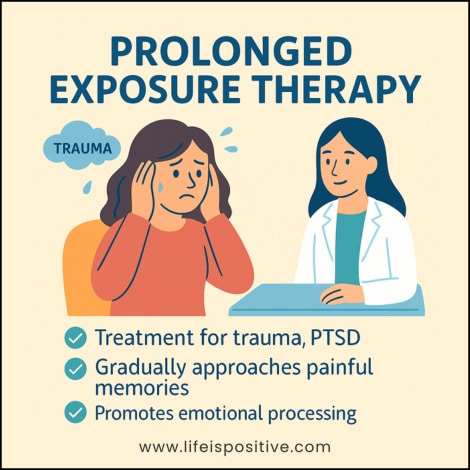
Over time, those memories lose their power, and the overwhelming emotions tied to them start to fade. Think of it as turning down the volume on those loud, haunting moments so you can reclaim peace and control in your life.
9. Cognitive Behavioral Therapy (CBT)
Cognitive Behavioral Therapy (CBT) is basically the ultimate mental makeover, especially when it comes to facing fears. The secret sauce? Exposure therapy—the part where you stop dodging what scares you and start tackling it head-on.
Instead of letting anxious thoughts run the show, CBT helps you swap them out for more empowering ones. Step by step, you learn to show up for yourself, build resilience, and boost your confidence. Because let’s be honest—your mind deserves a glow-up just as much as the rest of you!
Read: 10 Steps to Start Feeling Better
10. Eye Movement Desensitization and Reprocessing (EMDR)
Eye Movement Desensitization and Reprocessing (EMDR) is like giving your brain a gentle push to process the tough stuff. Often used for trauma and PTSD, it combines revisiting painful memories with guided techniques—like side-to-side eye movements—that help your mind reframe and release the intensity.
Think of it as your brain’s cleaning crew, sweeping away the emotional weight those memories carry. Over time, they feel less raw, leaving you freer to move forward with more peace, confidence, and ease.
Final Thoughts: Face Your Fears
Taking the leap into therapy that helps you face your fears can feel intimidating, but it’s also one of the bravest choices you’ll ever make. The truth is, these approaches are safe, structured, and designed to guide you step by step—so you’re never alone in the process.
Whether it’s exposure therapy, CBT, or another proven method, there’s a path that can work for you. It’s not about conquering everything overnight—it’s about small, supported steps that build confidence over time.
Reach out to a qualified mental health professional and start reclaiming your power. You truly deserve it.
For more empowering content, connect with our vibrant community here ➡️ Social Media.


