
Last updated: September 2026
Chakra meditation is a guided practice where you focus your attention on each of the seven chakras, from the base of the spine to the crown of the head, using breath, color visualization, and sometimes a seed mantra. A beginner session takes about 10 minutes: settle in, spend one minute on each chakra from root to crown, then rest and return gently.
If you’re new to meditation, “clearing your mind” can feel impossible. Chakra meditation gives your attention somewhere to go, which many beginners find easier than sitting in silence. You don’t need experience, special equipment, or any belief system to try it.
What Are Chakras?
In yogic and tantric traditions, chakras (Sanskrit for “wheel”) are seven energy centers along the spine, each linked to different emotional and spiritual themes.
A note on evidence: chakras are a spiritual framework, not something science has identified in the body. What research does support is meditation itself: regular practice is linked to lower stress, better focus, and improved emotional regulation. Chakra meditation uses a traditional structure to deliver those benefits.

How to Do Chakra Meditation: 6 Easy Steps
Time needed: about 10 minutes
Step 1: Get Comfortable (1 minute)
Sit in a chair or on the floor with your spine fairly straight and hands resting on your knees. Silence your phone and dim the lights if you can. You can also lie down, though you’re more likely to fall asleep.
Step 2: Breathe and Settle (1 minute)
Close your eyes. Inhale slowly through your nose for four counts and exhale for six. Let your shoulders drop. You’re not trying to empty your mind, only to slow down.
Read: Chakras for Financial Abundance
Step 3: Begin at the Root (1 minute)
Bring your attention to the base of your spine. Picture a warm red light. Feel the weight of your body on the seat or floor. Silently repeat “I am safe. I am grounded,” or chant LAM softly.
Step 4: Move Up Through Each Chakra (5 minutes)
Spend about a minute on each, breathing into the area and visualizing its color:
- Sacral (orange): “I allow myself to feel.”
- Solar plexus (yellow): “I am capable.”
- Heart (green): “I give and receive love.”
- Throat (blue): “I speak my truth.”
- Third eye (indigo): “I trust my insight.”
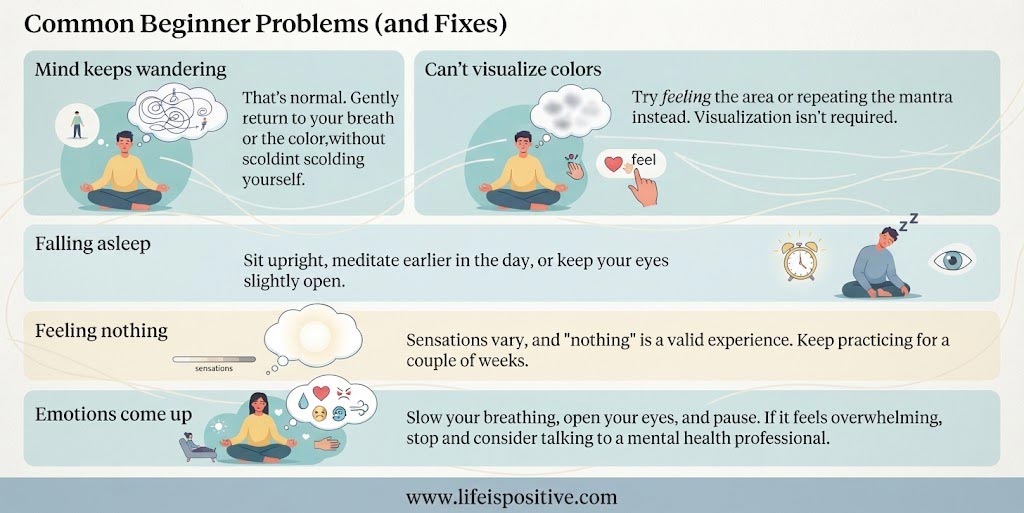
Notice any sensations such as warmth, tingling, or nothing at all, without judging them. All of these are normal.

Step 5: Rest at the Crown (1 minute)
Finish with the crown chakra, picturing violet or white light above your head. Then let go of the visualization and rest in stillness, following your breath.
Step 6: Return Gently (1 minute)
Wiggle your fingers and toes, take a deeper breath, and open your eyes slowly. Take a moment before standing up.
Read: Energy Healing for Beginners
Tips for Making It a Habit
- Start small. Ten minutes a day is enough. Even five counts.
- Pick a consistent time. Mornings work well for many people, but choose whatever you’ll stick to.
- Use guided audio. Free chakra meditations on YouTube, Spotify, or meditation apps help while you learn.
- Journal afterward. One or two sentences about how you felt build awareness over time.
- Focus on one chakra at a time on busy days. A short heart-chakra session still counts.
What Benefits Can You Expect?
Many people report feeling calmer, more centered, and more aware of their emotions and body tension after regular practice. These outcomes align with what research finds for meditation in general, though results vary and it isn’t a replacement for medical or mental health care.
FAQ
How long should beginners meditate on chakras?
Start with 10 minutes. You can shorten it to 5 minutes (about a minute on three or four chakras) or extend to 20 as it gets comfortable.
How often should I do chakra meditation?
Daily is ideal, but three to four times a week is a good start.
Do I need to chant the mantras?
No. They’re optional. You can chant aloud, repeat them silently, or skip them.
Can I meditate on just one chakra?
Yes. Many people focus on the one tied to what they’re working through, such as the heart chakra during stressful relationships or the root during uncertainty.
Is chakra meditation safe?
For most people, yes. If you have a history of trauma or a mental health condition, go gently and consider guidance from a qualified teacher or therapist.
Do I need crystals or incense?
No. They’re optional extras. Your breath and attention are all that’s required.
For more empowering content and relaxing music, click here ➡️ Social Media.
This article is for informational and spiritual purposes and isn’t a substitute for professional medical or mental health advice.


