
Medically reviewed by Alina Franklin, Psychologist | Updated September 2026
Stress is the background noise of modern life, and for many people it never fully switches off. You don’t need a complete life overhaul to feel calmer. Small, consistent habits can shift how your body and brain respond. This guide starts with quick relief for right now, then covers nine daily habits.
Stress vs. Anxiety: What’s the Difference?
Stress is a response to an external pressure, such as a deadline or conflict. It usually eases when the situation passes. Anxiety is persistent worry or fear that can continue even without a clear trigger, often with physical symptoms like a racing heart, tension, restlessness, or trouble sleeping. They overlap, and the habits below help with both.
Need Relief Right Now? Try These 2-Minute Techniques
Box Breathing
- Inhale through your nose for 4 counts
- Hold for 4
- Exhale slowly for 4
- Hold for 4
- Repeat for 2 minutes
Slow breathing activates your parasympathetic (“rest and digest”) nervous system, which counters the stress response. If holding your breath feels uncomfortable, simply make your exhale longer than your inhale.

5-4-3-2-1 Grounding
Name 5 things you can see, 4 you can feel, 3 you can hear, 2 you can smell, and 1 you can taste. This pulls your attention out of spiraling thoughts and into the present moment.
9 Daily Habits That Help Reduce Stress and Anxiety
1. Practice Slow Breathing Daily
Don’t save breathing exercises for emergencies. Two to five minutes each day, morning or evening, trains your body to settle more easily.
2. Move Your Body
Regular exercise is linked to lower anxiety and better mood. It helps burn off stress hormones and releases endorphins. Aim for around 150 minutes a week of moderate activity, but even a 20-minute walk counts.
3. Watch Your Caffeine
Caffeine can mimic or worsen anxiety symptoms: jitteriness, racing heart, restlessness, and poor sleep. Health authorities generally suggest staying under about 400 mg a day (roughly four cups of brewed coffee), and many people with anxiety feel better with less. Try swapping one cup for herbal tea for a week.
4. Protect Your Sleep
Poor sleep and anxiety feed each other. Aim for 7 to 9 hours, keep a consistent bedtime, dim screens before bed, and build a short wind-down routine.
5. Spend Time in Nature
Research suggests that even 20 to 30 minutes in a park or green space can lower stress hormones. A short walk among trees, a seat by the water, or some time in a garden all count.
6. Limit News and Social Media
Constant exposure to distressing news and comparison can keep your stress response switched on. Check the news at set times rather than all day, and keep phone-free windows in the morning and before bed.
7. Talk to Someone You Trust
Sharing what you’re carrying reduces the load. Talk to a friend, family member, or therapist. You don’t need to have it figured out first.
8. Try Mindfulness or Meditation
Mindfulness means noticing your thoughts without getting swept away by them. Even five minutes a day can help over time, and apps like Headspace or Insight Timer make it beginner-friendly. The goal isn’t to empty your mind.
9. Eat Regularly and Well
Skipping meals can cause energy and mood dips that feel like anxiety. A balanced pattern rich in vegetables, whole grains, fish, nuts, and fermented foods supports steady energy and overall health. Food isn’t a cure for anxiety, but it’s a solid foundation.
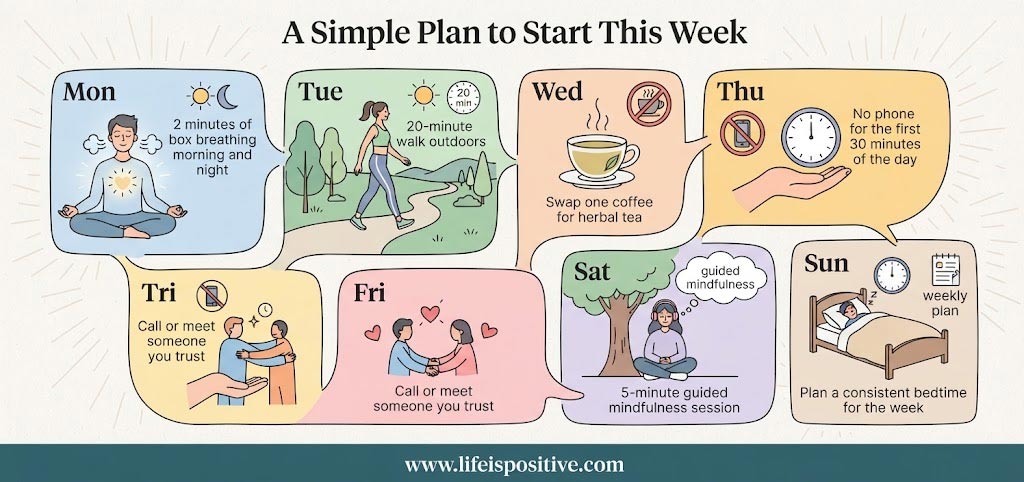
Start with one or two habits rather than all nine. Small wins build momentum.
When to Get Professional Help
Natural strategies help a lot, but they aren’t always enough. Consider talking to a doctor or mental health professional if:
- Worry or panic is frequent or hard to control
- Anxiety interferes with work, relationships, or sleep
- You’re avoiding places or activities because of fear
- You’re relying on alcohol or other substances to cope
- Symptoms have lasted several weeks or are getting worse
Cognitive behavioral therapy (CBT) has strong evidence for anxiety, and for some people medication is also helpful. Needing help is not a failure. It’s a sensible step.
If you’re in crisis or having thoughts of harming yourself, call or text 988 in the US or Canada, or contact your local emergency number or crisis line right away.
FAQ
How can I calm anxiety quickly?
Slow your breathing (longer exhales), try the 5-4-3-2-1 grounding technique, or take a short walk. These can ease symptoms within minutes, though they don’t remove the underlying cause.
What is the best natural remedy for anxiety?
No single remedy works for everyone. Regular exercise, good sleep, reduced caffeine, and mindfulness have the most consistent support. Talk to a doctor before using supplements or herbal products, as they can interact with medications.
Can stress cause physical symptoms?
Yes. Stress can cause headaches, muscle tension, stomach upset, fatigue, and sleep problems. If symptoms are new or severe, see a doctor to rule out other causes.
How long does it take for lifestyle changes to reduce anxiety?
Some techniques, like breathing, help within minutes. Habits like exercise and better sleep usually show benefits over several weeks.
When is anxiety a disorder?
When it’s persistent, excessive, and interferes with daily life. A professional can assess this and suggest appropriate treatment.
For more empowering content and relaxing music, connect with our social community here ➡️ Social Media.
This article is for informational purposes only and isn’t a substitute for professional medical or mental health advice, diagnosis, or treatment.
Sources: National Institute of Mental Health (NIMH), American Psychological Association, Mayo Clinic, Anxiety and Depression Association of America (ADAA)


